Key Takeaways
These ten novels offer very different ways into Australian fiction, from family sagas and mysteries to stories shaped by history and language. I’d choose one by mood, then let the book club conversation take its own curious turns.
- Cloudstreet follows two families sharing a house and a complicated stretch of life.
- The Secret River examines settlement, land, and the lasting consequences of colonial violence.
- Picnic at Hanging Rock and The Dry make landscape central to their mysteries.
- Boy Swallows Universe, The Slap, and Jasper Jones bring intimate lives into contact with larger social tensions.
- The Narrow Road to the Deep North, Carpentaria, and The Yield offer ambitious perspectives on memory, place, and belonging.
1. Cloudstreet by Tim Winton
I often reach for Cloudstreet when a book club wants a big, lived-in novel rather than a puzzle to solve. The Pickles and Lamb families share a house in Perth, and their daily lives gradually gather the weight of a family saga. Winton lets the ordinary—meals, arguments, work, and small acts of care—sit alongside moments that feel stranger and more mysterious.
The book’s many strands are easier to hold in mind when I think about what each one contributes to the shared story. This quick map is less a summary than a reading-club prompt for noticing how the novel’s pieces rub against each other.
| Thread | What it brings to the novel |
|---|---|
| Two families | Different temperaments under one roof |
| The house | A setting that shapes the families’ shared life |
| Everyday routines | The texture of work, meals, and domestic friction |
| The uncanny | A current of mystery within familiar surroundings |
That mix gives the novel its generous, unruly feel: a household can be funny and bruising in the same chapter. I find that room for contradiction especially useful in discussion, because readers may disagree about which characters are thriving, struggling, or simply muddling through. The book doesn’t insist that a family become tidy before it becomes worth reading about.
2. The Secret River by Kate Grenville
Kate Grenville’s The Secret River turns its attention to early colonial settlement and the conflict between a transported Englishman’s ambitions and the people already living on the land. I find it a compelling choice for a group prepared to discuss difficult history through a novel’s intimate point of view. Its questions about belonging and possession do not stay comfortably in the past.
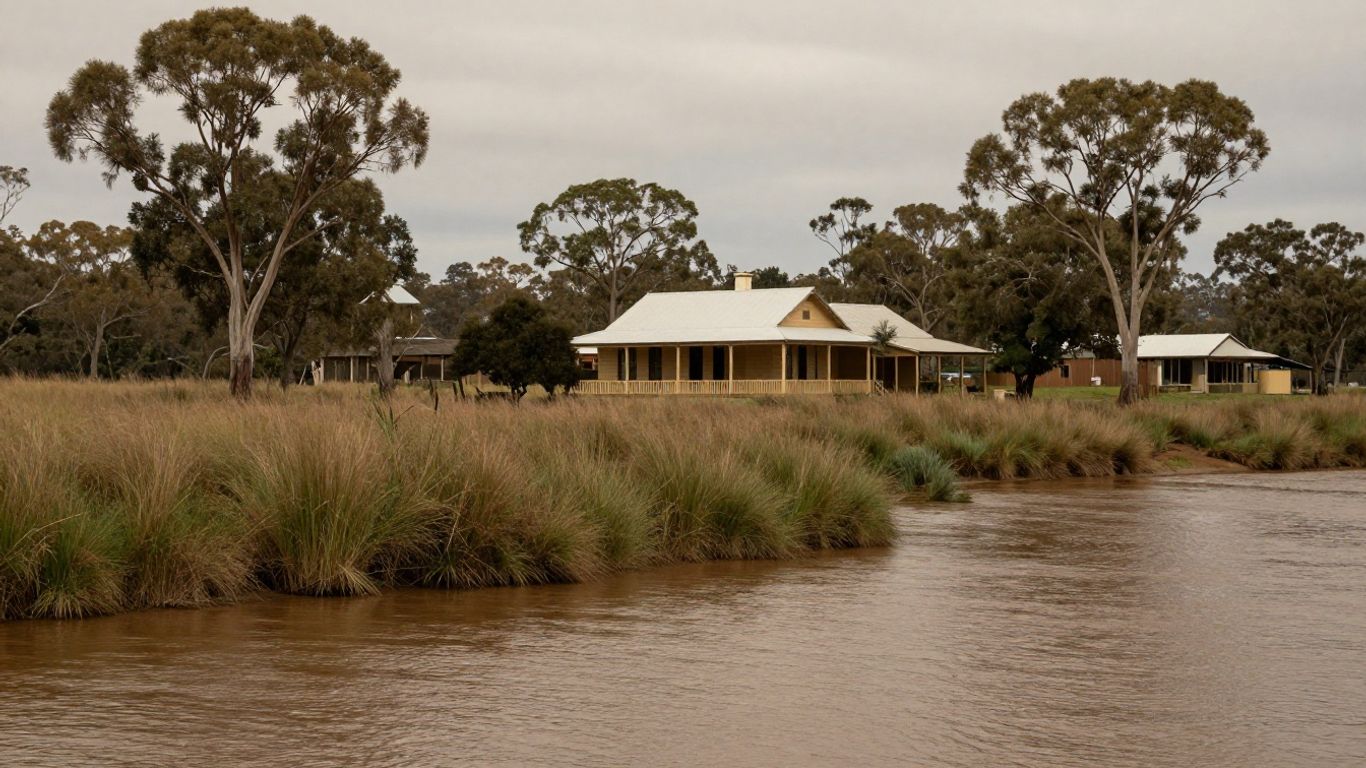
The novel asks readers to watch how a desire for security and prosperity can collide with the reality of dispossession. Grenville keeps that conflict close to the decisions and assumptions of the central character, which can make discussion both focused and uncomfortable. I would leave room for readers to talk about what the perspective reveals—and what it leaves beyond its frame.
For a book club, the richest conversations may come from resisting an easy verdict on the characters. The story invites us to look at the language people use to justify taking land, and at the distance between private hopes and public consequences. It is a serious, accessible novel, but not a soothing one; I’d pair it with time to reflect rather than a rushed round of opinions.
3. Picnic at Hanging Rock by Joan Lindsay
Joan Lindsay’s Picnic at Hanging Rock begins with a school outing and turns the Australian landscape into part of an enduring mystery. The novel’s atmosphere is its great invitation: the rock feels vivid and present, yet the questions surrounding the outing remain unsettled. I enjoy how the book allows unease to accumulate without hurrying to explain it away.
This is a natural pick for a club that likes to compare interpretations. Rather than treating every uncertain detail as a clue waiting to be solved, I’d ask how the gaps affect the reading experience. The novel can be discussed as a mystery, but also as a study in how people respond when certainty slips out of reach.
Lindsay’s controlled, restrained style helps the strange events feel more unsettling, not less. Readers who prefer firm answers may find that maddening; others will enjoy carrying the book’s open questions around for a while. Either way, it makes a memorable conversation about what a story owes its readers—and what it can leave unresolved.
4. The Dry by Jane Harper
In The Dry, Jane Harper places a mystery in a drought-stricken rural community, where Aaron Falk returns to a town marked by tragedy and suspicion. The dry conditions are more than background: they help establish the pressure under which the characters live. I’d recommend it to a group looking for a propulsive read with a strong sense of place.
Harper builds tension through the investigation and through the relationships Falk has to revisit. The town’s history shapes what people are willing to say, while old connections complicate the search for answers. That gives the novel two kinds of momentum: the question of what happened and the slower work of understanding a community’s fault lines.
I like this one for a club that appreciates plot but still wants something to chew over afterwards. Readers can compare which details they trusted and how the landscape influenced their expectations. It is a satisfying mystery, yet the setting and the weight of the past keep it from feeling like a puzzle detached from human lives.
5. Boy Swallows Universe by Trent Dalton
Trent Dalton’s Boy Swallows Universe follows Eli Bell through a childhood shaped by family, danger, and the search for hope. Its voice has an exuberant energy that can move quickly from the vivid to the tender. I’d pick it for a group ready to follow a young narrator whose imagination is as lively as the world around him is difficult.
The novel’s coming-of-age story is not a neat march from hardship to wisdom. Eli encounters adults who are flawed, caring, or both, and his understanding grows through those encounters. Dalton’s storytelling has a particular appetite for memorable characters and unlikely turns, giving the book a pulse that is hard to mistake for anyone else’s.
For discussion, I’d focus on how the novel balances its darker material with humour and wonder. Does Eli’s way of seeing the world make it easier to face what happens, or does it make the contrast sharper? The book offers plenty of material for that conversation, while its lively voice makes it an inviting choice for readers who want a story with momentum.
6. The Slap by Christos Tsiolkas
Christos Tsiolkas’s The Slap begins with a single act at a backyard gathering and follows the disputes that ripple outward from it. By shifting among characters, the novel shows how one event can look radically different depending on who is telling the story. I find that structure especially effective for a book club, where disagreement is practically part of the furniture.
The novel opens onto questions about parenting, responsibility, friendship, and community. Its characters do not line up as easy examples of right and wrong; they bring their own histories and assumptions to the conflict. That makes the reading less about reaching a swift verdict and more about noticing what each person believes they are defending.
I would suggest this to a group that enjoys robust discussion and can tolerate a few opposing readings around the table. The changing perspectives invite readers to examine their own first reactions, too. It is a deliberately provocative novel, and its central dispute gives a club a clear starting point without deciding the conversation in advance.
7. The Narrow Road to the Deep North by Richard Flanagan
Richard Flanagan’s The Narrow Road to the Deep North moves across time to explore war, memory, love, and the damage carried by survivors. At its centre is Dorrigo Evans, whose life is shaped by his experience as a prisoner of war and by what follows. I’d choose it for a group ready to read slowly and take on difficult material.
The novel’s attention to the aftermath of war gives it a reach beyond the immediate events of conflict. It considers what people remember, what they cannot put aside, and how private lives are altered by violence. Flanagan’s shifts across time ask the reader to assemble a life from moments rather than follow a simple, straight line.
This is a demanding book, but it rewards a patient reading. I would not expect a club to settle on one account of its characters or its treatment of suffering. Instead, I’d make room for conversation about memory, responsibility, and the limits of what a person can recover from—a weighty discussion, certainly, but one the novel earns.
8. Carpentaria by Alexis Wright
Alexis Wright’s Carpentaria is a formally ambitious novel set in a remote Gulf community, where family, place, and conflict are bound together. Its storytelling draws on an expansive sense of time and a distinctive narrative voice. I’d suggest it to readers who are open to a novel that sets its own pace and asks them to listen closely.
The book’s scale is part of its character. Rather than narrowing its attention to one private problem, it moves through community life and competing forces, with the natural world woven into the story. The result can feel exuberant and challenging in equal measure; I find it best approached with curiosity rather than a demand for conventional plotting.
For a book club, I’d invite readers to talk about how the novel’s voice shapes their sense of place and whose experiences receive attention. It may take a little time to settle into its rhythms, but that is not a flaw to iron out. Sometimes a novel is asking us to adjust our reading habits, not the other way around.
9. The Yield by Tara June Winch
Tara June Winch’s The Yield brings together family history, loss, and the recovery of language. The story moves through different voices and documents, giving readers several ways to approach what has been passed down and what is at risk of being lost. I’d choose it for a club interested in how language can carry personal and collective memory.
The novel’s structure rewards attention: its different parts speak to one another rather than simply repeating the same account. That makes the act of reading feel like gathering pieces of a family’s story. It also gives a group something concrete to discuss, from shifts in voice to the significance of what a character records or remembers.
I find The Yield moving without being sentimental about the work of remembering. Its themes of belonging and inheritance give the book a quiet urgency, while its form keeps readers actively involved. For a club, it is a strong choice when the group wants to talk about not only what a story says, but how its language helps make that story possible.
10. Jasper Jones by Craig Silvey
Craig Silvey’s Jasper Jones follows Charlie Bucktin, a young boy drawn into a secret that unsettles his small-town world. The story combines a coming-of-age perspective with mystery and an examination of prejudice. I’d recommend it to readers who like a strong narrative voice and a plot that keeps social tensions close to the surface.
Charlie’s changing understanding of the people around him gives the novel much of its emotional movement. His friendship with Jasper becomes a way to question the judgments that the town treats as ordinary. The book’s suspense carries the story forward, but the conversations it opens up about fairness and belonging are what I would bring to the meeting.
If I were organising the discussion, I’d use a few simple prompts to help the group move from plot into interpretation:
- Which moments changed Charlie’s view of someone in his town?
- How does the small-town setting shape what people say or keep quiet?
- Where do the characters challenge assumptions, and where do they repeat them?
Those questions leave room for different readings without turning the meeting into a test. Jasper Jones has enough narrative drive to keep pages turning, while its moral and social questions can sustain the conversation after the mystery has been discussed. It makes an approachable final pick for a list that has ranged across many styles of Australian fiction.
Conclusion
These ten novels make a varied starting shelf for anyone exploring aussie fiction must reads: some are expansive and patient, others are taut, strange, or formally adventurous. As a book club organiser, I’d choose the next one by asking what kind of conversation the group wants—not just what kind of plot it prefers—and let the reading do the rest.
Frequently Asked Questions
What makes a novel Australian fiction?
Australian fiction includes stories shaped by Australian places, histories, communities, or cultural perspectives. The novels in this list approach that broad tradition in very different ways.
Which book on this list is best for a book club?
It depends on the group. The Slap invites debate about a central conflict, while Cloudstreet offers a broad family story and Picnic at Hanging Rock leaves room for competing interpretations.
Which of these novels is a mystery?
The Dry, Jasper Jones, and Picnic at Hanging Rock all involve mystery, though each handles suspense and answers differently.
Are these books suitable for every reader?
Not necessarily. Several deal with difficult subjects, including colonial violence, war, and prejudice. Readers may want to check a book’s themes before choosing it for a group.
Do I need to read these novels in a particular order?
No. Each title can be read on its own, so you can begin with whichever setting, style, or subject most appeals to you.
Which book is a good starting point for Australian fiction?
A good starting point is the novel whose subject interests you most. Readers drawn to family sagas might begin with Cloudstreet, while mystery readers could try The Dry.
How can a book club discuss a challenging novel?
Allow time for different reactions, ask open-ended questions, and avoid expecting the group to reach one shared interpretation. A thoughtful discussion can include uncertainty and disagreement.